How Do Silicone Rubber Strips Help With Weather Sealing?
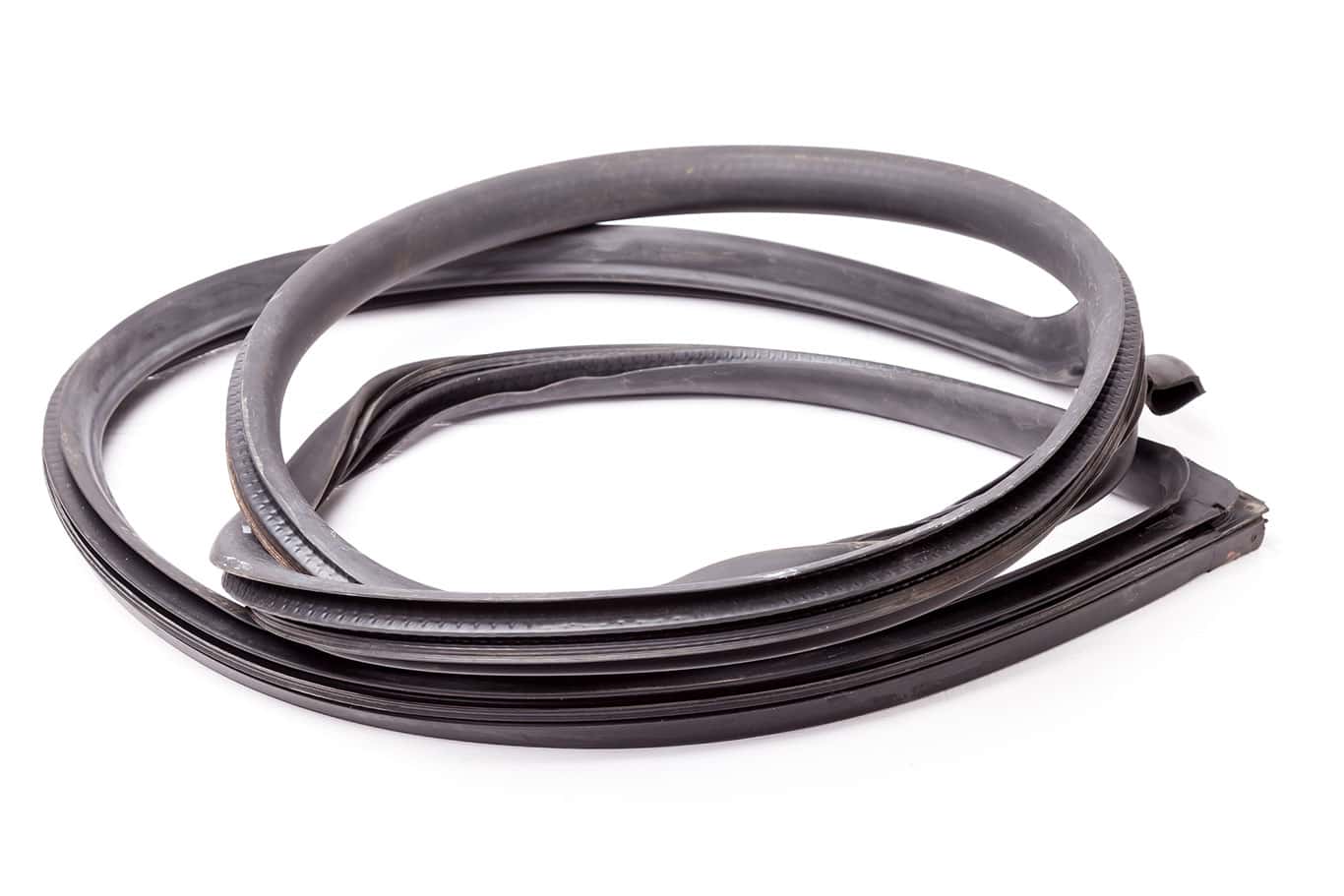
Silicone rubber strips help with weather sealing by creating a flexible barrier between two surfaces. When the strip is compressed, it fills small gaps and irregularities that might otherwise allow rainwater, draughts, dust or other contaminants to pass through.
This makes silicone rubber strips useful across industrial, commercial and specialist manufacturing applications where components, doors, panels, housings or equipment must remain protected from changing outdoor conditions.
An effective weather seal does more than keep out visible rain. It may also need to cope with temperature changes, repeated movement, prolonged exposure to sunlight and regular compression. Silicone rubber is often selected because it can retain useful flexibility under conditions that may cause some other elastomeric materials to harden, crack or lose their shape.
However, the quality of a weather seal depends on more than the material alone. Strip thickness, width, hardness, surface condition, compression and installation method must all suit the application.
What makes silicone rubber suitable for weather sealing?
Weather sealing materials are regularly exposed to environmental conditions that can alter their physical properties. A seal fitted to an external enclosure, access panel or industrial door may experience low winter temperatures, warm summer surfaces, rainfall, ultraviolet exposure and repeated cycles of expansion and contraction.
Silicone rubber is valued for weather sealing because it combines flexibility with resistance to a broad range of environmental conditions. A correctly specified strip can deform when compressed and then recover towards its original shape when the pressure is removed.
This recovery is important. The strip must continue pressing against the adjoining surface to maintain the seal. If the material takes a permanent compressed shape too quickly, gaps can develop and the effectiveness of the weather barrier may decline.
Flexibility across changing temperatures
Temperature changes can affect the flexibility of rubber materials. Some materials may become noticeably harder in cold conditions or soften excessively when exposed to heat.
Silicone rubber generally maintains its flexibility across a wide operating temperature range. The exact temperature capability depends on the silicone compound, formulation and product specification, so buyers should confirm the relevant figures for their application rather than relying on a general material description.
For weather sealing, this temperature stability can help the strip continue conforming to surrounding surfaces throughout seasonal changes.
For example, an outdoor electrical housing may be exposed to cold overnight temperatures followed by direct sunlight during the day. The housing materials can expand and contract, changing the dimensions of the sealing gap. A flexible silicone strip can accommodate a degree of this movement while continuing to apply sealing pressure.
Resistance to sunlight and outdoor exposure
External seals may receive prolonged exposure to sunlight and ultraviolet radiation. Over time, this can contribute to fading, surface deterioration, cracking or hardening in materials that are not suited to outdoor service.
Silicone rubber is frequently considered for external sealing because of its resistance to weathering and ultraviolet exposure. This makes it suitable for long-term applications where replacing a deteriorated seal would be inconvenient or disruptive.
The surrounding design still matters. Sharp edges, excessive stretching, chemical contamination and incorrect compression can damage even a weather-resistant material.
Ability to conform to uneven surfaces
Two adjoining surfaces may look flat but still contain minor imperfections, manufacturing tolerances or variations in alignment. A rigid barrier would not fill these inconsistencies effectively.
A silicone rubber strip can deform around small surface variations. When sufficient pressure is applied, the material occupies spaces through which air, moisture or dirt might otherwise travel.
This is one reason why the required strip thickness should not be based only on the visible gap. The design must also account for surface tolerances, movement and the level of compression needed to create a consistent seal.
How do silicone strips prevent water, air and dust ingress?
A silicone strip does not normally stop ingress simply by being positioned between two surfaces. It must create continuous contact along the sealing line.
When the panel, door, lid or component is closed, the silicone strip is compressed. The strip pushes back against both surfaces, forming a barrier through which water, air and particles have difficulty passing.
Three factors are particularly important:
- The strip must be continuous and free from unintended gaps.
- Compression must be sufficient to create contact without crushing or permanently deforming the material.
- Corners, joints, fixing points and surface transitions must be sealed carefully.
If any section has inadequate contact, water can follow that weak point into the enclosure. This is particularly important because water does not always travel directly through a gap. It may run along edges, collect around fasteners or be driven into small openings by wind.
Limiting water ingress
For rain protection, the silicone strip must form a continuous barrier around the area being sealed. Water should also be directed away from the seal where possible.
A well-designed enclosure may use overlapping edges, drainage channels or angled surfaces alongside the rubber seal. These features reduce the amount of standing water placed directly against the sealing line.
The silicone strip then acts as part of the overall weather protection system rather than being expected to compensate for poor enclosure design.
The condition of the contact surfaces is equally important. Dirt, old adhesive, corrosion or physical damage can prevent the strip from sitting evenly. Preparing the surfaces before installation can improve adhesion and reduce the risk of localised leaks.
Reducing draughts and uncontrolled airflow
Air leakage may be a concern in equipment housings, commercial structures, industrial doors and temperature-controlled areas. Even a narrow gap can allow cold air, warm air or airborne contaminants to pass through.
Silicone rubber strips help reduce this airflow by filling the clearance between components. The strip should be selected so that it remains in contact even when the surrounding structure moves slightly.
This can support more stable internal conditions and reduce the amount of moisture, dust or debris carried through the gap by moving air.
A seal intended to reduce ordinary draughts may not be suitable for an application involving pressure differences or high-speed airflow. In more demanding environments, the required pressure resistance and seal geometry should be assessed as part of the specification.
Controlling dust and debris
Outdoor and industrial environments may expose equipment to dust, fibres, grit and other particles. These contaminants can affect moving parts, electrical connections and sensitive internal components.
A compressed silicone strip can close off entry routes around access panels, inspection covers and enclosure doors. The sealing surface must remain clean and undamaged, particularly where the panel is opened regularly.
If particles become embedded in the seal or collect on the mating surface, they may create small channels that reduce sealing performance. Routine cleaning and inspection may therefore be necessary in dusty environments.
Where are silicone rubber weather seals commonly used?
Silicone rubber strips can be used wherever two surfaces need a flexible environmental barrier. Their suitability depends on the required dimensions, temperature exposure, compression, movement and contact with other substances.
Common applications include industrial cabinets, electrical enclosures, machinery panels, commercial doors, access hatches, lighting housings and specialist equipment.
Industrial and electrical enclosures
Outdoor electrical and control equipment must often be protected from rain, condensation and airborne contaminants. Silicone rubber strips may be installed around doors, removable panels and access covers.
In these applications, the sealing arrangement should be designed around the enclosure’s required level of protection. The silicone strip forms one part of the system alongside the enclosure construction, fasteners, hinges and cable entry points.
The seal should apply even pressure around the full perimeter. If the door flexes or the fasteners are spaced too widely, some areas may receive less compression than others.
Machinery guards and access panels
Industrial machinery frequently includes removable guards or service panels. These components may need sealing to limit the entry of moisture, dust, cleaning residue or process debris.
A silicone strip can provide a reusable seal where a panel must be opened for maintenance. The material should recover after repeated compression cycles, while the fixing arrangement should return the panel to a consistent closed position.
Regularly opened panels require particular attention because repeated handling can stretch, dislodge or contaminate the seal.
Doors, hatches and external structures
Silicone strips may also be used around industrial doors, cabinet doors, vehicle compartments and specialist hatches. They can help reduce rain ingress and draughts while allowing the adjoining components to open and close.
The expected movement should be considered carefully. A seal that is mainly compressed during closure will experience different forces from one that is dragged across a surface every time the door moves.
Where sliding contact is unavoidable, friction and wear resistance become more important. The designer may need to consider a different profile, surface finish or installation position to reduce abrasion.
Lighting and specialist equipment
External lighting housings and specialist equipment may use silicone seals to protect electrical components from changing weather conditions.
These applications can involve both environmental exposure and heat generated by the equipment. The silicone compound must therefore suit the expected operating temperature as well as the external conditions.
Buyers looking for suitable material can explore silicone rubber strips in different dimensions and specifications.
How should silicone strip dimensions and hardness be selected?
Choosing a weather sealing strip involves matching its physical properties to the design of the joint. Using a strip simply because it fits into the visible space may lead to uneven compression, excessive closing force or insufficient sealing pressure.
Measure the sealing gap accurately
The gap should be measured in multiple positions rather than at a single point. Manufacturing tolerances, panel movement and frame distortion can create differences around the sealing perimeter.
The specification should consider the smallest and largest expected gaps. The selected strip must be capable of sealing the largest gap without being excessively compressed at the smallest point.
Where the assembly is still at the design stage, tolerances should be considered alongside the nominal dimensions.
Select an appropriate thickness
The strip must be thick enough to contact both surfaces and accommodate variation. However, an excessively thick strip can make the panel difficult to close and may place unnecessary stress on hinges, catches or fasteners.
Too much compression can also accelerate permanent deformation. The strip may gradually lose its ability to recover, reducing the pressure maintained against the sealing surfaces.
The recommended compression level depends on the silicone formulation, hardness, strip dimensions and application. Technical guidance should be obtained when the required performance is critical.
Consider material hardness
Rubber hardness affects how easily the strip compresses and how much force it applies in return.
A softer silicone strip may conform more readily to uneven surfaces and require less closing force. A harder strip may resist deformation but could be less forgiving where the surfaces are misaligned.
Neither option is automatically better. The correct hardness depends on the gap, available closing force, expected movement and required sealing pressure.
Account for corners and joints
Corners are frequent weak points in weather sealing systems. A strip may buckle, stretch or leave a small opening when taken around a tight corner.
Where separate lengths meet, the joint must be carefully prepared to avoid a break in the sealing line. The joint position should not be placed where water is likely to collect when this can be avoided.
Bespoke profiles or fabricated gasket arrangements may provide a more consistent result for complex shapes.
What can cause a silicone weather seal to perform poorly?
Silicone rubber is durable, but premature sealing problems can occur when the product is incorrectly specified or installed.
Common causes include inadequate compression, excessive compression, poor surface preparation, incompatible adhesives, contamination, mechanical damage and incorrect dimensions.
Uneven or insufficient compression
If the strip does not contact both surfaces consistently, water and air can pass through the uncompressed areas. This may happen because the strip is too thin, the panel is distorted or the fasteners do not apply even pressure.
A visual inspection can identify obvious gaps, but smaller inconsistencies may require more detailed testing.
Excessive compression
Compressing the strip too heavily can increase closing force and speed up permanent deformation. The seal may initially appear effective but then lose recovery over time.
Excessive compression can also force the strip out of position, especially if the adhesive or mechanical retention method is inadequate.
Poor installation surfaces
Adhesive-backed strips require clean, dry and suitable surfaces. Grease, dust, corrosion, moisture and loose coatings can prevent reliable adhesion.
The correct preparation process depends on the surface material and adhesive system. Installers should follow the relevant product guidance rather than relying on a general cleaning method.
Stretching during installation
Pulling the strip tightly while fitting it may appear to make installation easier. Once released, however, the material can attempt to return to its original length.
This can cause the strip to shrink away from corners or joints, leaving gaps. The strip should normally be installed without unnecessary tension.
Chemical or mechanical exposure
Although silicone performs well in many environments, it is not universally resistant to every chemical, oil, solvent or cleaning agent. Compatibility should be checked where the seal may come into contact with process substances.
Mechanical abrasion can also damage the strip. A seal that is repeatedly scraped, pinched or cut by a moving component may fail even when the silicone compound is suitable for outdoor exposure.
How should silicone weather seals be maintained?
Weather seals should be included in routine inspection and maintenance schedules. The appropriate frequency depends on the importance of the seal, the severity of the environment and how often the assembly is opened.
Inspect the strip for cracks, cuts, flattened areas, loose sections, contamination and gaps at corners or joints. The mating surface should also be checked for corrosion, distortion and accumulated debris.
Cleaning should use a method compatible with both the silicone and the surrounding surfaces. Aggressive tools or unsuitable chemicals may damage the strip.
A seal should be replaced when it no longer returns sufficiently after compression, cannot remain securely positioned or shows damage that interrupts the sealing line. Waiting until visible water ingress occurs may expose internal components to avoidable harm.
Frequently Asked Questions
Are silicone rubber strips completely waterproof?
A correctly specified and installed silicone rubber strip can form an effective barrier against water ingress. However, the overall assembly must also be designed properly. Corners, joints, fasteners, drainage and enclosure construction can all affect weather resistance.
Can silicone strips be used outdoors permanently?
Silicone rubber is commonly selected for long-term outdoor applications because of its resistance to weathering, ultraviolet exposure and temperature changes. The exact service life will depend on the compound, installation, compression and operating conditions.
Can adhesive-backed silicone strips be used for weather sealing?
Adhesive-backed strips can simplify installation on suitable surfaces. The surface must be clean, dry and compatible with the adhesive. Applications involving significant movement, moisture or mechanical stress may require additional retention or a different installation method.
How much should a silicone strip be compressed?
The required compression depends on the strip dimensions, hardness and application. It should be compressed enough to maintain continuous contact without being crushed or placed under unnecessary strain. Technical advice should be sought for critical sealing applications.
When should a silicone weather seal be replaced?
Replacement may be needed when the strip is cracked, cut, permanently flattened, loose or no longer forms continuous contact. Changes in closing force or signs of moisture and dust ingress can also indicate that the seal should be inspected.
Silicone rubber strips help with weather sealing by filling gaps, maintaining flexible contact and limiting the movement of water, air, dust and debris between adjoining surfaces. Their resistance to changing temperatures, sunlight and outdoor exposure makes them suitable for many demanding industrial applications.
Reliable performance still depends on correct specification. The strip dimensions, hardness, compression and installation method must match the joint design and operating environment. Regular inspection can then identify damage or deformation before it leads to equipment contamination or water ingress.
Silco Products supplies silicone rubber components for industrial and specialist applications. To discuss strip dimensions, material requirements or a bespoke sealing application, contact the team for practical specification support.
Phone: 01903 732088
Email: sales@silcoproducts.co.uk
Find out more: https://siliconerubberproducts.co.uk/
Make an enquiry: Contact Silco Products
Find us
FURTHER READING